Birth in the Bishop's Palace
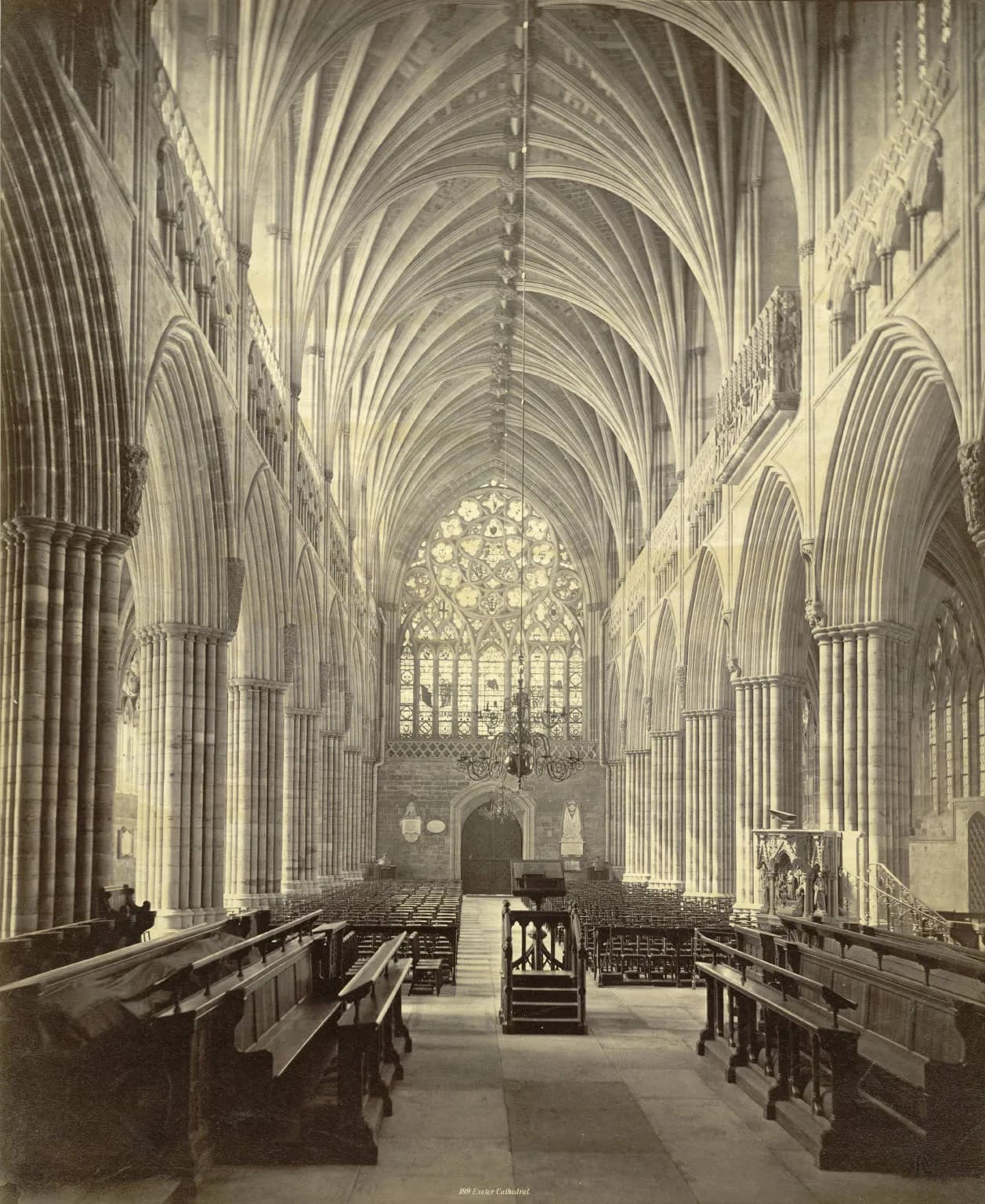
William Temple was born on 15 October 1881 in the Bishop's Palace, Exeter, the second son of Frederick Temple, who was then serving as Bishop of Exeter. The family resided at the Grade I Listed palace on Palace Gate during Frederick's episcopate from 1869 to 1885. His father was 59 years old at the time of his birth; his mother, Beatrice Lascelles, was 35. The privileged circumstances of his birth belied the profound influence he would later exert on British social policy and the emerging welfare state.
A Family of Churchmen
Temple's father, Frederick Temple, would later become Archbishop of Canterbury from 1896 to 1902, making William one of the few Archbishops of Canterbury whose father had also held that office. William Temple later wrote that his father was "among men the chief inspiration of my life." Until he reached 21, his life was spent in episcopal palaces, moving from Exeter to London when his father was translated to the Bishopric of London in 1885.
From Oxford to the Pulpit
Temple entered Balliol College, Oxford in 1900 and achieved a double first in classics, later serving as President of the Oxford Union. His ordination was delayed by theological hesitancy; Bishop Francis Paget of Oxford declined to ordain him in January 1906 due to Temple's reservations about the Virgin birth and bodily resurrection. After further study and guidance from Henry Scott Holland and Burnett Hillman Streeter, Archbishop Randall Davidson ordained him deacon on 20 December 1908 at Canterbury Cathedral, and priest on 19 December 1909.
Before his full ecclesiastical career began, Temple served as headmaster of Repton School from 1910 to 1914, though he confessed in late 1910 that he doubted "whether headmastering is really my line." A colleague noted that whilst he was not temperamentally suited to be a great headmaster, "both in chapel and in the classroom... he was a source of real inspiration."
A Voice for Social Justice
Temple's commitment to social reform crystallised during his time as Rector of St James's, Piccadilly, from 1914 to 1917. In 1916 he married Frances Gertrude Acland Anson; the couple had no children. In 1918 he joined the Labour Party and remained a member for eight years, earning a reputation as the "Red Archbishop" despite his privileged background.
In 1908, Temple became the first president of the newly formed Workers' Educational Association, a post he held for 16 years. He also founded the Life and Liberty Movement, campaigning for independence for the Church of England from parliamentary control. This campaign led to the Enabling Bill and the creation of the Church Assembly with delegated parliamentary powers.
Bishop and Mediator
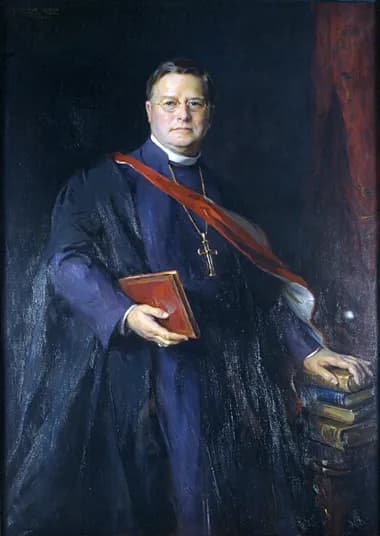
Consecrated Bishop of Manchester on 25 January 1921 at York Minster, Temple took a leading part in mediating during the General Strike of 1926. In 1926 he also founded the separate Diocese of Blackburn, dividing the over-large Manchester diocese. Despite his Labour sympathies, Prime Minister Stanley Baldwin appointed him Archbishop of York in 1928, and he was enthroned on 10 January 1929.
The Architect of Christian Socialism
Temple's time as Archbishop of York (1929–1942) was described by historian Adrian Hastings as "by far the most important and effective in his life." He convened and chaired the Malvern Conference in 1941, which proposed six requisites for a society based on Christianity: that every child should find itself a member of a family housed with decency and dignity; have an opportunity for education up to maturity; that every citizen should have sufficient income to make a home; that every worker should have a voice in the conduct of their business; that every citizen should have sufficient leisure, including two days' rest in seven; and that every citizen should be guaranteed freedom of worship, speech, assembly, and association.
His most influential work, Christianity and Social Order (1942), sold approximately 140,000 copies and sought to "marry faith and socialism." The book's arguments directly influenced the post-war consensus and the founding principles of the welfare state. Temple also produced Men Without Work (1938), a report on unemployment produced with the Pilgrim Trust.
Primate of All England
In 1942 Temple was translated to Canterbury after Cosmo Lang's retirement and enthroned on 23 April 1942. Winston Churchill, who recommended him for the post despite Temple's Labour membership, described him as "the only half a crown article in the sixpenny bazaar." Temple was instrumental in the Education Act 1944, completing the work of Archbishop Davidson to reform Britain's fragmented education system and negotiating the place of church schools within the new framework.
He was also one of the instigators of the World Council of Churches and the British Council of Churches, cementing his reputation as a leading ecumenist. On 23 March 1943 he addressed the House of Lords, urging action on Nazi atrocities.
Death and Lasting Legacy
William Temple died of a heart attack on 26 October 1944 at Westgate-on-Sea, aged 63, having suffered from gout throughout his life. He was the first Archbishop of Canterbury to be cremated; his ashes were buried in the cloister at Canterbury Cathedral, next to his father's grave. His funeral service was held at Canterbury Cathedral on 31 October 1944.
Tributes poured in from across the religious and political spectrum. Roman Catholic Archbishop of Westminster Bernard Griffin paid tribute, whilst Chief Rabbi Joseph Hertz stated: "Dr Temple was a great power for good far beyond the borders of the national church. Israel has lost a true friend and humanity a valiant champion." President Franklin D. Roosevelt wrote to King George VI: "As an ardent advocate of international co-operation based on Christian principles he exerted a profound influence throughout the world."
Temple is honoured in the Church of England calendar on 6 November. The William Temple Foundation in Manchester continues his work as a research and resource centre. Today, the Bishop's Palace in Exeter, where he was born, houses the Exeter Cathedral Library & Archives in its west wing; though no public memorial to Temple exists in the city of his birth, his influence on British social policy endures in the welfare state his writings helped to shape.